

 by
by 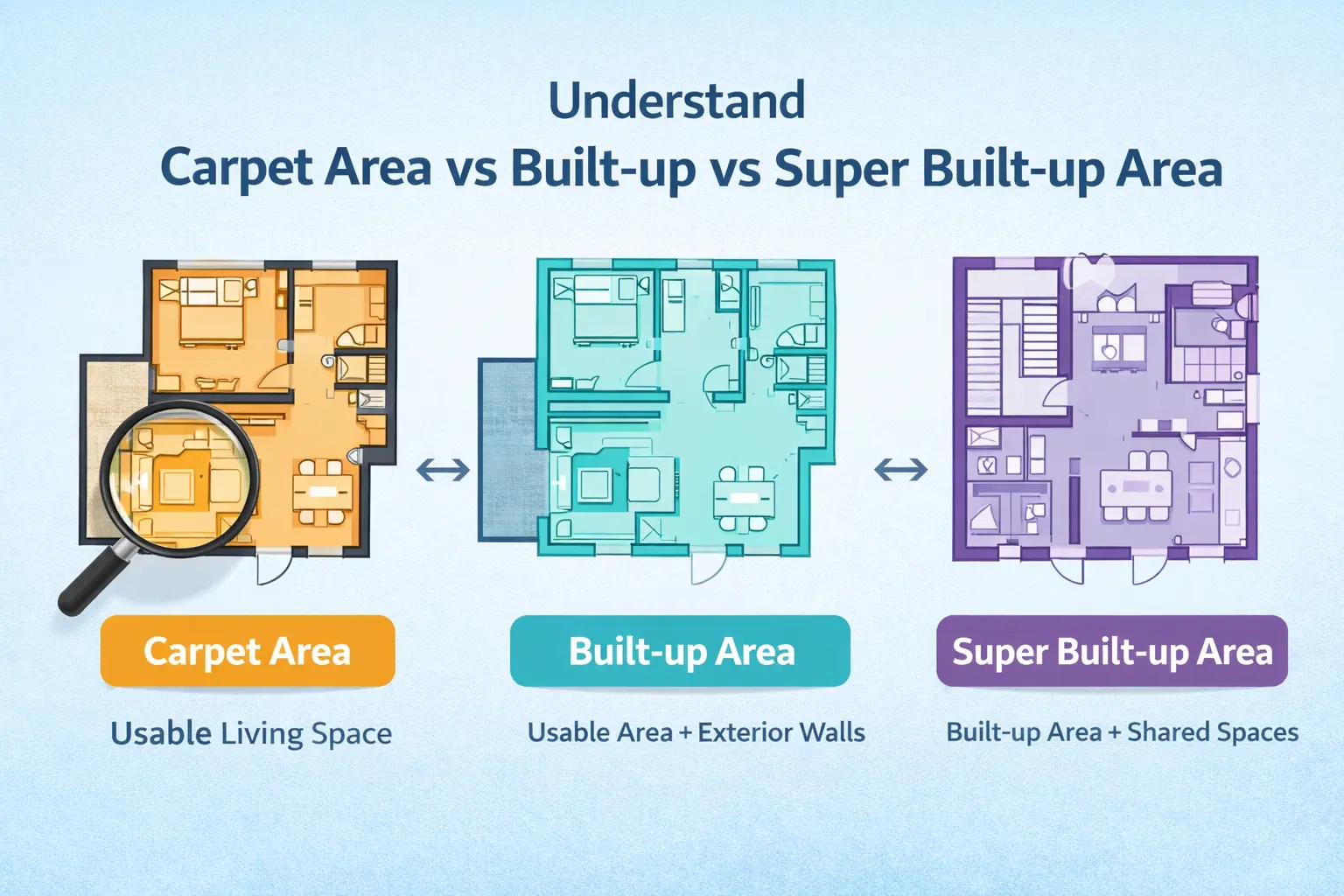
When you step into the real estate market, one of the biggest confusion points for buyers is understanding what is carpet area vs built-up area vs super built-up area.
Most buyers think they are buying a “1000 sq ft apartment”, but the reality is very different. The actual usable space is often much less. This happens because developers use different area terms for pricing and marketing.
If you want to make a smart property decision, you must clearly understand these terms.
What is Carpet Area?
The carpet area meaning refers to the actual usable area inside your home—the space where you can walk, place furniture, and live comfortably.
In simple terms:
Carpet area = wall-to-wall usable space
Carpet Area Includes:
- Bedrooms
- Living room
- Kitchen
- Bathrooms
- Internal passages
Carpet Area Excludes:
- External walls
- Balconies
- Open terrace
- Common areas
This is the real space you actually live in
According to RERA, carpet area also includes internal wall thickness, making it more standardized and transparent.
What is RERA Carpet Area?
After the introduction of RERA, the definition of carpet area became more structured.
RERA carpet area = net usable floor area inside the apartment (including internal walls but excluding external walls, balconies, and common areas)
Why it matters:
- Builders must sell based on carpet area
- Reduces manipulation in pricing
- Ensures transparency
Before RERA, developers used super built-up area for pricing, which often misled buyers.
What is Built-up Area?
The built-up area meaning refers to the total area of the apartment including carpet area + walls + balconies.
Formula:
Built-up area = Carpet area + wall thickness + balcony/utility areas
Key Points:
- Usually 10–20% more than carpet area
- Includes structural elements
- Does not include common areas
Example:
If carpet area = 1000 sq ft
Built-up area ≈ 1100–1200 sq ft
What is Super Built-up Area?
The super built-up area meaning is the total area including built-up area + proportionate share of common areas.
Formula:
Super built-up area = Built-up area + common areas share
Common Areas Include:
- Lobbies
- Staircases
- Lifts
- Clubhouse
- Gym
- Swimming pool
- Corridors
This is also called saleable area
Super Built-up Area Calculation
The super built-up area calculation depends on something called the loading factor.
Formula:
Super built-up area = Carpet area × (1 + Loading Factor)
Example:
- Carpet Area = 1000 sq ft
- Loading = 30%
Super built-up = 1300 sq ft
Loading usually ranges between 20% to 40% depending on project luxury level.
Loading Factor in Real Estate
The loading factor meaning is the difference between:
Super built-up area – Carpet area
It represents:
- Shared amenities cost
- Common space allocation
Higher luxury projects = higher loading
Difference Between Carpet Area, Built-up Area & Super Built-up Area
| Type | Includes | Excludes | Best For |
| Carpet Area | Usable space | Walls, balcony, common area | Real living space |
| Built-up Area | Carpet + walls + balcony | Common areas | Structural size |
| Super Built-up Area | Built-up + common areas | Nothing | Pricing |
Key Insight:
Carpet area = what you use
Super built-up area = what you pay for
Carpet Area vs Built-up Area
The difference between carpet area and built-up area is mainly:
- Built-up area includes wall thickness & balcony
- Carpet area is only usable space
Gap = approx. 10–20%
Super Built-up Area vs Carpet Area
When comparing super built-up area vs carpet area:
- Carpet area = actual usable space
- Super built-up = total chargeable area
Example:
1000 sq ft carpet → 1400 sq ft super built-up
This is why flats feel smaller than advertised.
Why Carpet Area is Most Important for Buyers
After RERA, the pricing must be based on carpet area, not super built-up.
Benefits:
- Transparent pricing
- Easy comparison between projects
- No hidden loading tricks
Always compare properties based on carpet area, not super built-up area
Practical Tips for Homebuyers
1. Always Ask for Carpet Area
Don’t rely on brochure numbers
2. Check Loading Percentage
Higher loading = less usable space
3. Compare Carpet Area Across Projects
Not super built-up
4. Verify with RERA
Check official project details on RERA website
5. Measure Space if Possible
Avoid surprises after possession
Real Example (Understanding Pricing Trick)
Builder says:
1500 sq ft flat
Reality:
- Carpet area = 1050 sq ft
- Built-up = 1200 sq ft
- Super built-up = 1500 sq ft
You are paying for 450 sq ft extra space you don’t use
Final Conclusion
Understanding what is carpet area vs built-up area vs super built-up area is one of the most important things before buying a property.
Key Takeaways:
- Carpet area = actual usable space
- Built-up area = carpet + walls
- Super built-up = total charged area
- Always focus on carpet area
RERA has made the system more transparent, but buyers still need awareness to avoid overpaying.
Smart buyers don’t buy size—they buy usable space.
FAQs
Q.1 What is carpet area in simple terms?
Ans: It is the actual usable area inside your home.
Q.2 Which area is used for pricing after RERA?
Ans: Carpet area is used for pricing.
Q.3 What is loading factor in real estate?
Ans: It is the extra area added to carpet area for common spaces.
Q.4 Which is better carpet area or super built-up?
Ans: Carpet area is better for comparing properties.
Also Read:
- What is Mutation of Property?
- What is RERA and How Does It Protect Homebuyers in India 2026
- 10 Things to Check Before Buying an Apartment
- What is Circle Rate in Gurgaon
- What is Property Registry in India?
- What is Stamp Duty and Registration Charges in Gurgaon?
- What is Freehold vs Leasehold Property
- What is Occupancy Certificate
- What is Land Use?
- Best Griha Pravesh Muhurat in 2026



Join The Discussion