

 by
by 
After nearly five years of delays, the NCR Master Plan 2041 is finally set to undergo a high-level review and approval process by the National Capital Region Planning Board (NCRPB). This long-awaited regional planning framework is expected to shape the future of Delhi-NCR for the next two decades, influencing urban development, transportation, housing, environmental conservation, and economic growth.
For homebuyers, investors, developers, and businesses, the NCR Master Plan 2041 Gurgaon update could become one of the most significant policy developments in recent years. From improving regional connectivity to identifying future growth corridors, the plan has the potential to directly impact Gurgaon property prices, infrastructure investments, and long-term real estate appreciation.
In this article, we explore the latest NCR Master Plan 2041 Review, its key proposals, and the likely NCR Master Plan 2041 Impact on Gurgaon and the broader Delhi-NCR real estate market.
What is NCR Master Plan 2041?
The Regional Plan 2041, commonly referred to as the NCR Master Plan 2041, is a long-term planning framework designed to guide development across the National Capital Region (NCR).
The plan covers Delhi, Haryana, Uttar Pradesh, and Rajasthan regions falling under NCR and aims to:
- Improve regional connectivity
- Support planned urbanization
- Create future growth centers
- Enhance infrastructure development
- Protect environmentally sensitive zones
- Promote balanced economic growth
- Reduce pressure on Delhi by strengthening surrounding cities
The current NCR development framework is based on Regional Plan 2021. The new plan seeks to address emerging challenges such as rapid urban expansion, population growth, transportation bottlenecks, housing demand, and environmental sustainability.
Why is the NCR Master Plan 2041 important?
According to the latest review discussions, Delhi-NCR is projected to become one of the world’s largest urban regions over the next decade.
Key statistics highlighted during the review include:
- NCR area expanded from approximately 30,242 sq km to over 55,000 sq km
- NCR population expected to exceed 58 million and continue growing rapidly
- Increasing demand for housing, commercial spaces, transportation, and public infrastructure
- Growing pressure on existing cities including Gurugram, Noida, Ghaziabad, Faridabad, and Sonipat
Without a coordinated development strategy, infrastructure and housing challenges could significantly affect future growth.
The Delhi NCR Master Plan 2041 benefits include creating a structured roadmap for managing this growth efficiently.
Key Issues Being Reviewed Under NCR Master Plan 2041
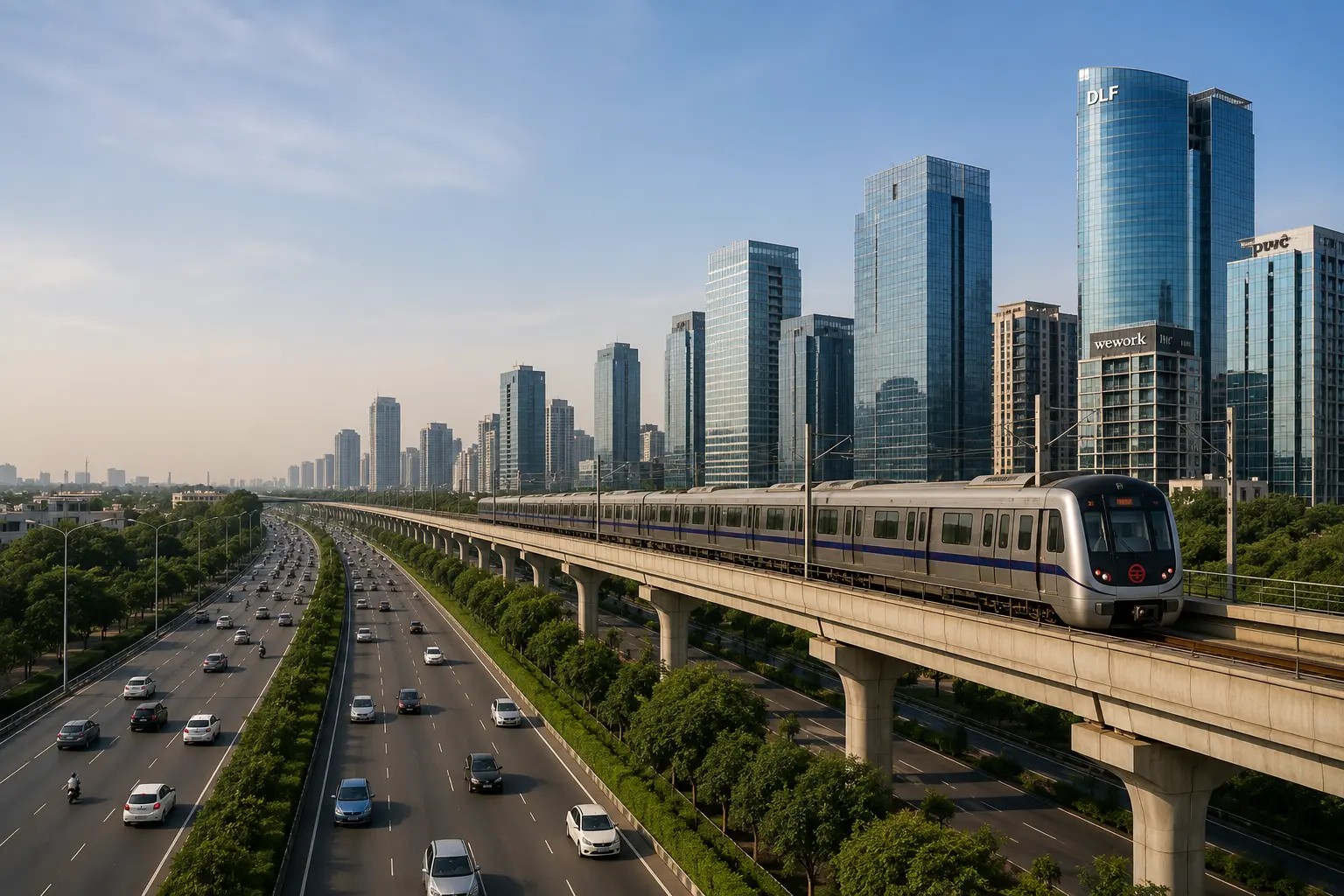
The latest NCRPB meeting is expected to focus on four major areas:
1. NCR Boundary Review
One of the most debated topics is the future boundary of NCR.
Haryana has previously suggested reducing the NCR footprint by removing districts that receive limited direct benefits from NCR inclusion.
Some districts that were discussed in earlier proposals include:
- Panipat
- Karnal
- Jind
- Mahendragarh
However, current indications suggest that the existing NCR structure may remain largely unchanged.
This decision is crucial because NCR designation influences:
- Infrastructure funding
- Urban planning regulations
- Industrial development
- Real estate investments
2. Future of the Natural Conservation Zone (NCZ)
Another important issue is the protection of the Aravalli ecosystem through the Natural Conservation Zone (NCZ).
The Aravallis play a critical role in:
- Groundwater recharge
- Air quality improvement
- Ecological balance
- Climate resilience
The final draft is expected to retain safeguards protecting the Aravalli region while balancing development needs.
For Gurgaon, this is especially significant because many luxury developments and future urban expansion zones are located near environmentally sensitive areas.
3. Managing Rapid Urbanization
The NCR is experiencing one of the fastest rates of urban growth in India.
The plan proposes:
- New urban growth centers
- Strengthening existing cities
- Planned urban expansion
- Better land-use management
- Sustainable urban development
Cities expected to benefit include:
- Gurugram
- Noida
- Greater Noida
- Ghaziabad
- Faridabad
- Sonipat
This strategy aims to prevent unplanned development and create balanced growth across NCR.
4. Transport Integration and Connectivity
Perhaps the most impactful aspect of the NCR Master Plan 2041 infrastructure projects Gurgaon discussion is transportation.
Authorities aim to integrate:
- Metro networks
- Regional Rapid Transit System (RRTS)
- Rail corridors
- Ring rail systems
- National highways
- Expressways
The objective is to create a seamless regional transportation network.
Earlier versions of the plan even proposed a “30-minute NCR” concept, where residents could travel quickly between major employment and residential centers.
NCR Master Plan 2041 Impact on Gurgaon
Among all NCR cities, Gurgaon is likely to be one of the biggest beneficiaries of the Regional Plan 2041.
The city already serves as:
- A major employment hub
- A technology center
- A financial services destination
- A luxury housing market
- A commercial real estate hotspot
Improved connectivity and infrastructure can further strengthen its position.
How NCR Master Plan 2041 Could Affect Gurgaon Property Prices
One of the most searched topics today is:
How NCR Master Plan 2041 affects property prices
Historically, major infrastructure announcements have led to strong appreciation in Gurgaon real estate.
The plan could positively impact property values through:
Better Connectivity
Reduced travel time generally increases property demand.
Areas with improved transportation links often experience:
- Higher residential demand
- Better rental yields
- Faster capital appreciation
Increased Investor Confidence
Large-scale planning frameworks create long-term visibility.
Investors prefer regions where future infrastructure and development plans are clearly defined.
Expansion of Employment Hubs
New growth centers create demand for:
- Residential housing
- Commercial offices
- Retail developments
- Warehousing infrastructure
Improved Urban Planning
Well-planned infrastructure often translates into higher property values over time.
This is why many analysts believe the Gurgaon property market after NCR Master Plan 2041 could witness sustained growth.
NCR Master Plan 2041 Dwarka Expressway Impact
The Dwarka Expressway remains one of Gurgaon’s most important growth corridors.
Several factors could further strengthen its position:
Enhanced Regional Connectivity
The Master Plan’s focus on integrated transport networks can improve access between:
- Delhi
- Gurgaon
- IGI Airport
- Manesar
- Future NCR growth centers
Increased Residential Demand
Demand for housing near transportation corridors typically increases.
This could benefit sectors such as:
- Sector 99
- Sector 102
- Sector 103
- Sector 104
- Sector 106
- Sector 111
- Sector 113
Commercial Development
Improved connectivity often attracts:
- Office projects
- Retail developments
- Hospitality investments
The NCR Master Plan 2041 Dwarka Expressway impact could therefore be significant for both homebuyers and investors.
NCR Master Plan 2041 Sohna Growth Corridor
Another area expected to gain attention is the Sohna region.
The proposed focus on future growth centers could support:
- Sohna Road development
- South Gurgaon expansion
- New residential townships
- Industrial growth
The NCR Master Plan 2041 Sohna growth corridor may emerge as an attractive destination for long-term investors seeking affordable entry points compared to central Gurgaon.
Future Infrastructure in Gurgaon 2041
Several infrastructure projects already underway align with the broader objectives of Regional Plan 2041.
These include:
Gurgaon Metro Expansion
The proposed metro network expansion will improve connectivity between emerging residential sectors and business districts.
RRTS Connectivity
Future integration with Regional Rapid Transit Systems could significantly reduce travel times across NCR.
Southern Peripheral Road Growth
SPR is rapidly emerging as a premium residential and commercial corridor.
Projects around:
- Sector 68
- Sector 69
- Sector 70
- Sector 71
could benefit from future planning initiatives.
Golf Course Extension Road Projects
This corridor continues to attract luxury developments due to superior infrastructure and connectivity.
New Road Infrastructure
Enhanced road connectivity between Gurgaon, Manesar, Delhi, Faridabad, and Noida could further support property appreciation.
Gurgaon Real Estate Growth 2041: What Investors Should Expect
The Future of Gurgaon real estate 2041 appears promising due to several structural factors:
Strong Corporate Presence
Gurgaon remains home to:
- Fortune 500 companies
- IT firms
- Global service centers
- Startups
Rising Population
Population growth will continue driving housing demand.
Infrastructure-Led Development
Roads, metro projects, and transit connectivity create long-term value.
Luxury Housing Demand
Demand for premium residences remains strong among HNIs and professionals.
Commercial Expansion
Office space absorption continues to support residential demand.
These factors collectively support positive Gurgaon property price prediction 2041 scenarios.
Best Sectors in Gurgaon for Investment 2041
Based on infrastructure growth trends and future development potential, investors should closely watch:
Dwarka Expressway
- Sector 102
- Sector 103
- Sector 106
- Sector 111
- Sector 113
New Gurgaon
- Sector 82
- Sector 83
- Sector 84
- Sector 85
- Sector 88
SPR Corridor
- Sector 68
- Sector 69
- Sector 70
- Sector 71
Golf Course Extension Road
- Sector 61
- Sector 62
- Sector 63A
- Sector 65
- Sector 66
These areas align closely with future growth corridors and infrastructure investments.
NCR Master Plan 2041 Investment Opportunities
The NCR Master Plan 2041 investment opportunities extend beyond Gurgaon.
Potential beneficiaries include:
- Greater Noida
- Faridabad
- Sonipat
- Ghaziabad
- Manesar
- Sohna
However, Gurgaon is likely to remain a preferred destination due to its strong employment ecosystem and premium real estate market.
Final Thoughts
The NCR Master Plan 2041 is much more than a planning document—it is a blueprint for the future of Delhi-NCR. Its focus on transport integration, environmental protection, planned urbanization, regional connectivity, and infrastructure-led growth could reshape the region over the next two decades.
For Gurgaon, the implications are particularly significant. Improved connectivity, future growth corridors, metro expansion, RRTS integration, and stronger urban planning could positively influence property values, attract new investments, and reinforce the city’s position as NCR’s leading real estate destination.
Whether you are a homebuyer, investor, developer, or business owner, understanding the NCR Master Plan 2041 Gurgaon developments will be essential for making informed decisions in the years ahead. As the review process moves forward, the NCR Master Plan 2041 is expected to play a central role in shaping Gurgaon’s infrastructure, property market, and future growth trajectory.

Join The Discussion