

 by
by 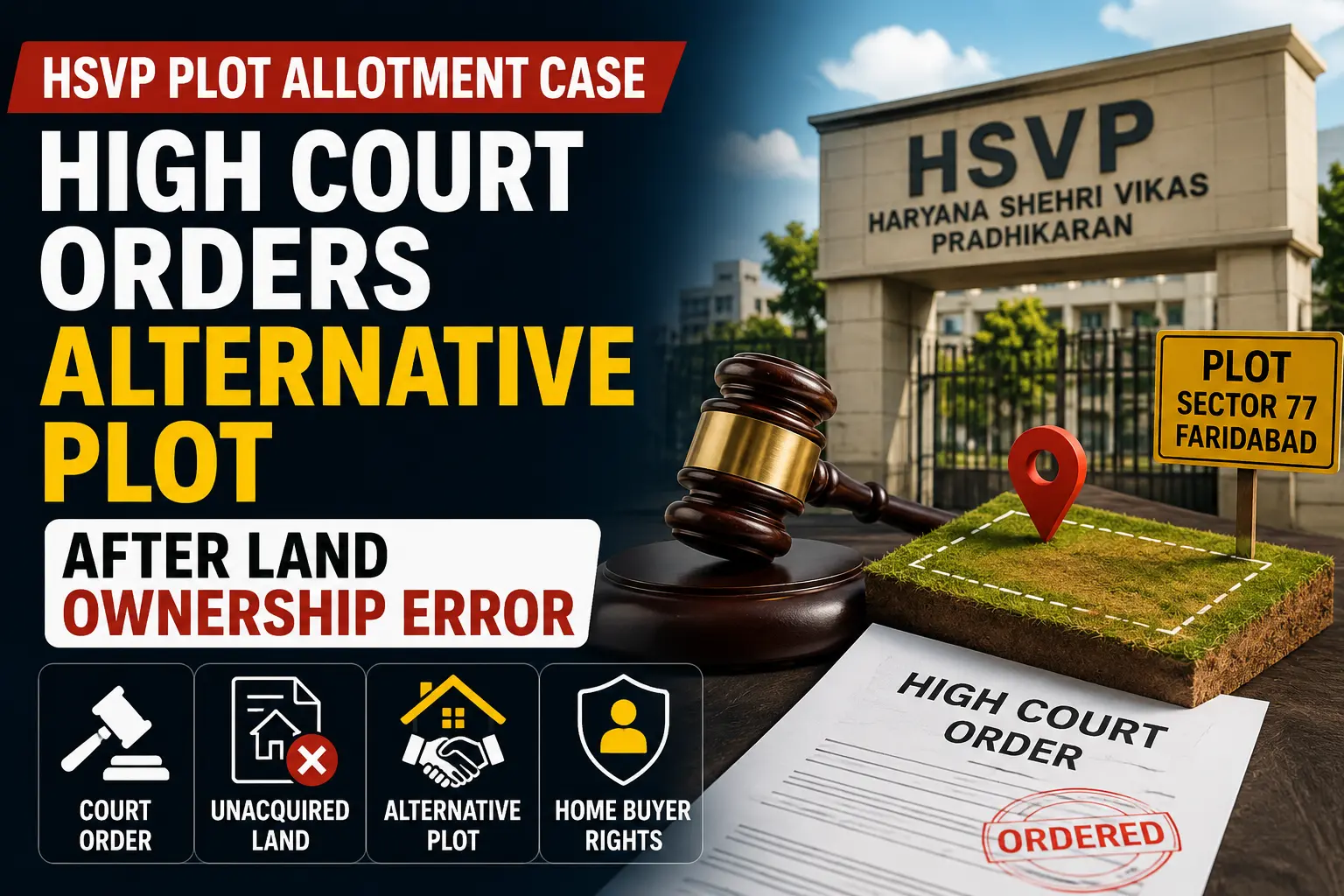
The HSVP plot allotment case has raised serious questions about land verification, public authority accountability and homebuyer rights in Haryana. According to recent reports, Haryana Shehri Vikas Pradhikaran (HSVP) allegedly auctioned a plot in Faridabad Sector 77 on land that was not properly acquired by the authority. After the buyer paid the full amount, the issue came to light when possession could not be delivered. The matter reached the Punjab and Haryana High Court, which directed HSVP to provide an alternative plot to the affected buyer.
This case is not just about one plot. It is an important reminder for every property buyer, investor and real estate professional that property title verification, land ownership verification and proper documentation are essential before purchasing any plot, even if the seller is a government authority or urban development authority.
The HSVP unacquired land case also highlights the risks associated with plot auctions, delayed possession and land acquisition errors. For buyers in Gurgaon, Faridabad and other parts of Haryana, this judgment offers valuable lessons on due diligence before property purchase and buyer protection laws.
What Is the HSVP Plot Allotment Case?
The HSVP plot allotment case relates to a residential plot in Faridabad Sector 77 that was reportedly sold through an e-auction process. The buyer participated in the auction, paid the required amount and received allotment-related communication. However, when the buyer sought possession, it was discovered that the land on which the plot was carved out was not properly acquired by HSVP.
This created a serious HSVP plot possession dispute. The buyer had already paid the money, but HSVP was unable to hand over the plot because the land was not legally available for possession. The matter eventually reached the High Court.
The court took a serious view of the matter and observed that once a public authority collects the full amount from a citizen, it cannot simply avoid responsibility by offering a refund when the mistake is on its side. The court directed HSVP to provide an alternative plot in the same area within a specified time.
This makes the case one of the most important examples of court relief for homebuyers in Haryana.
Why This Case Is Important for Property Buyers
The HSVP plot auction controversy matters because buyers often assume that government auction plots are completely safe. In most cases, government authority plots are considered more reliable than private transactions. However, this case shows that even government allotments require proper verification.
The issue is important for three reasons:
First, it shows that mistakes in land acquisition can directly affect buyers.
Second, it proves that public authorities can also be held accountable when buyers suffer due to administrative negligence.
Third, it strengthens the importance of homebuyer rights in Haryana and consumer protection in real estate.
For anyone planning a residential plot investment, this case is a clear reminder that a plot should not be purchased only on the basis of auction documents or allotment letters. Buyers must verify land title, possession status, acquisition status and development readiness.
What Happened in the Faridabad Sector 77 Plot Case?
The Faridabad Sector 77 plot case reportedly involved Plot No. 142-G, which was sold through an e-auction. The buyer completed payment and expected possession. Later, it was found that the plot was carved out on land that HSVP had not properly acquired.
This created a HSVP land ownership dispute because the authority could not deliver possession of the allotted plot.
According to the news report, HSVP offered to refund the amount, but the buyer argued that refund alone was not enough. Property prices in the area had increased, and the buyer had lost the opportunity to purchase an equivalent plot at the earlier price.
The High Court accepted the broader concern and directed HSVP to provide a similar alternative plot in the same sector or area.
This is why the phrase High Court orders HSVP to give alternative plot has become the most important legal and real estate takeaway from this case.
HSVP Sold Plot on Unacquired Land: What Does It Mean?
The phrase HSVP sold plot on unacquired land means that the authority allegedly auctioned a plot without having proper legal control over the land. In real estate, land acquisition is a formal legal process through which the government or authority obtains land for development.
If the land acquisition process Haryana is incomplete or disputed, the authority may not be able to create legally deliverable plots on that land.
In simple terms:
- The buyer paid for a plot.
- HSVP issued allotment-related documents.
- Possession could not be given.
- The land was not properly available with HSVP.
- The buyer had to approach the court for relief.
This makes the matter a serious Haryana property allotment dispute and a major learning point for all property buyers.
Haryana High Court HSVP Case: What Did the Court Say?
In the Haryana High Court HSVP case, the court strongly questioned how HSVP could auction a plot on land that was not under its proper possession or acquisition.
The court reportedly emphasized that the buyer should not suffer because of the authority’s internal mistake. If the authority failed to verify land status before auction, the burden should not be passed on to the allottee.
The court’s direction for an HSVP alternative plot order is important because it recognizes that simple refund may not always be fair compensation. In real estate, plot prices can rise significantly over time. If a buyer paid in 2022 and is asked to take a refund years later, the same amount may not allow the buyer to purchase a similar plot again.
This is why alternative plot compensation becomes more practical and fair in such cases.
Why Refund Alone May Not Be Enough
In many property disputes, authorities or developers try to settle matters by refunding the original amount. However, in real estate, refund alone may not provide complete relief.
For example:
- Property prices may increase over time.
- The buyer may lose several years.
- Loan interest or financial planning may be affected.
- The buyer may miss other investment opportunities.
- Emotional and legal stress may increase.
In this HSVP plot allotment mistake case, the buyer’s argument was based on the fact that market prices had changed. The buyer had already fulfilled his payment obligation. Therefore, asking him to accept only a refund would not fully restore his position.
The court’s direction to provide an alternative plot reflects practical justice.
HSVP E-Auction Plot Controversy: A Bigger Issue?
The HSVP e-auction plot controversy is not limited to one buyer. In recent years, several issues have been reported around e-auctioned plots, possession delays and incomplete development works in some HSVP sectors.
The broader concern is whether plots are being auctioned only after completing necessary checks, including:
- Land ownership verification
- Acquisition confirmation
- Development work status
- Road and sewer connectivity
- Physical possession status
- Litigation status
- Encumbrance checks
If such checks are skipped, buyers may face serious legal risks in real estate despite purchasing through an official channel.
This is why buyers searching for HSVP latest news, HSVP plot case update or HSVP High Court case should understand the broader implications of this case.
Impact on Homebuyer Rights in Haryana
This case strengthens the discussion around homebuyer rights in Haryana. Buyers have the right to receive what they paid for. If a public authority auctions a plot, collects money and issues allotment documents, it must ensure that possession can be delivered.
The judgment also supports the idea of public authority accountability. Government bodies and development authorities cannot act casually in property matters because buyers invest their life savings in land and housing.
For buyers, the case reinforces these rights:
- Right to clear title
- Right to possession
- Right to fair compensation
- Right to legal remedy
- Right to transparency
- Right to proper documentation
This is an important development for buyer protection laws and property dispute resolution in Haryana.
What Property Buyers Should Learn from This Case
The biggest lesson from this case is simple: do not ignore due diligence, even when buying from an authority.
Before purchasing any plot, buyers should follow a proper real estate due diligence guide and complete a full property documentation check.
Here are the key checks:
1. Verify Ownership
Always confirm who legally owns the land. This is the first step in land ownership verification.
2. Check Acquisition Status
If the plot is being sold by an authority, confirm whether the land has been fully acquired and transferred.
3. Review Litigation Status
Check whether any court case, stay order or dispute exists on the land.
4. Inspect Possession Status
Physical possession is as important as paper ownership.
5. Verify Development Work
Roads, sewer lines, electricity, water supply and approach roads should be checked before payment.
6. Check Allotment Terms
Understand refund, possession, interest and compensation clauses.
7. Consult a Property Expert
A legal or real estate expert can help reduce risk.
These steps are essential for property investment safety.
How to Verify Plot Ownership Before Buying
Many buyers search for how to verify plot ownership before buying. The process may vary depending on the state and authority, but generally buyers should check:
- Sale deed or allotment letter
- Mutation record
- Jamabandi or revenue record
- Acquisition notification
- Possession certificate
- Encumbrance certificate
- Site plan approval
- Layout approval
- Litigation record
- Authority allotment status
For Haryana buyers, property title check online Haryana and official land record portals can help in basic verification. However, online checks should not replace legal due diligence.
This is especially important in cases involving HSVP possession issue or HSVP property dispute Haryana.
Documents to Check Before Buying a Plot
If you are planning to buy a plot, these are the key documents to check before buying a plot:
- Title deed
- Sale deed or allotment letter
- Possession certificate
- Approved layout plan
- Zoning certificate
- Non-encumbrance certificate
- Revenue records
- Mutation details
- RERA details, if applicable
- Development authority approvals
- Payment receipts
- Litigation search report
This checklist acts as a legal checklist before buying land and helps reduce the risk of fraud or future disputes.
Safe Property Investment in Haryana: Practical Tips
For safe property investment in Haryana, buyers should not depend only on brochures, auction portals or seller claims.
Follow these practical steps:
- Visit the site physically.
- Speak to nearby plot owners.
- Check whether roads and utilities exist.
- Verify if the land is under litigation.
- Confirm possession availability.
- Review authority records.
- Take legal advice before full payment.
- Avoid rushed decisions.
These are among the best property investment tips for Haryana buyers, especially those looking at plots in Faridabad, Gurgaon, Sonipat, Panchkula and other developing areas.
How to Avoid Property Fraud
Many people search for how to avoid property fraud after reading cases like this. While no method can eliminate risk completely, buyers can reduce risk by following a disciplined process.
Never buy a plot without:
- Verifying title
- Checking possession
- Reviewing development status
- Confirming seller authority
- Checking court cases
- Understanding refund policy
- Getting written commitments
The HSVP auctioned wrong land issue shows why blind trust can be risky even in official auctions.
Government Authority Plot Allotment: Is It Still Safe?
A government authority plot allotment is generally considered safer than many private land deals because it usually comes with structured planning and official documentation. However, this case shows that buyers should still verify every detail.
Authority allotments may still involve issues like:
- Delayed possession
- Incomplete development
- Land acquisition errors
- Court disputes
- Compensation delays
- Change in layout plans
This does not mean buyers should avoid authority plots. It means buyers should approach them with proper due diligence.
What Does This Mean for Gurgaon and NCR Buyers?
Although the case is from Faridabad, its impact is relevant for Gurgaon and NCR buyers as well. Many buyers in Gurgaon invest in plots, floors and redevelopment projects where title and possession verification are critical.
For Gurgaon buyers, this case highlights:
- Importance of title verification
- Need for authority approval checks
- Risk of disputed land
- Value of legal documentation
- Importance of expert guidance
Whether buying a residential plot, builder floor, apartment or commercial property, buyers should focus on real estate compliance and proper records.
Conclusion
The HSVP plot allotment case is an important reminder that property buyers must carefully verify land records, possession status and authority approvals before making any investment. The High Court’s direction for an alternative plot gives relief to the affected buyer and also sends a clear message that public authorities must act responsibly when handling property allotments.
The case involving HSVP sold plot on unacquired land, the Faridabad Sector 77 plot case, and the HSVP alternative plot order will likely remain an important reference point for future property disputes in Haryana. It also strengthens awareness around property title verification, homebuyer rights in Haryana, and due diligence before property purchase.
For buyers, the final lesson is clear: even when buying from an authority, never skip verification. The HSVP plot allotment case proves that a safe property decision begins with proper documents, legal checks and informed guidance.
FAQs
1. What is the HSVP plot allotment case?
The HSVP plot allotment case refers to a dispute where HSVP reportedly auctioned a plot in Faridabad Sector 77 on land that was not properly acquired, leading to a High Court direction for an alternative plot.
2. What did the High Court order in the HSVP case?
The court directed HSVP to provide an alternative plot to the affected buyer, as the buyer had paid the full amount but could not receive possession due to HSVP’s land ownership error.
3. What is the HSVP unacquired land case?
The HSVP unacquired land case means the authority allegedly created and auctioned a plot on land that was not properly acquired or legally available for allotment.
4. Why is the Faridabad Sector 77 plot case important?
The Faridabad Sector 77 plot case is important because it highlights the need for land title verification, acquisition checks and public authority accountability in property allotments.
5. How can buyers verify plot ownership before buying?
Buyers should check title documents, revenue records, acquisition status, possession certificate, layout approval, litigation status and authority records before buying any plot.
6. What documents should be checked before buying a plot?
Important documents include title deed, allotment letter, possession certificate, approved layout plan, mutation record, encumbrance certificate, revenue record and litigation search report.
7. Is buying an HSVP plot safe?
HSVP plots are generally considered safer than many private land deals, but buyers should still verify land ownership, possession status, development work and litigation records before investing.
Also Read:
- NCR Regional Plan 2041 Nears Approval
- Raheja Developers ED Case: ₹503 Crore Assets Attached, Impact on Gurgaon Homebuyers
- NCR Master Plan 2041 Review Today
- Top 5 Tallest Buildings in Gurgaon
- Gurugram Metro Phase 2 Gets World Bank Approval
- Top 10 Biggest Mall in Gurgaon for Shopping
- Best House Front Design Ideas in 2026
- Gurgaon Plot Rates 2026: Private Colonies Sector-Wise Market Snapshot
- Best Griha Pravesh Muhurat in 2026
- What is Circle Rate in Gurgaon Real Estate


Join The Discussion